
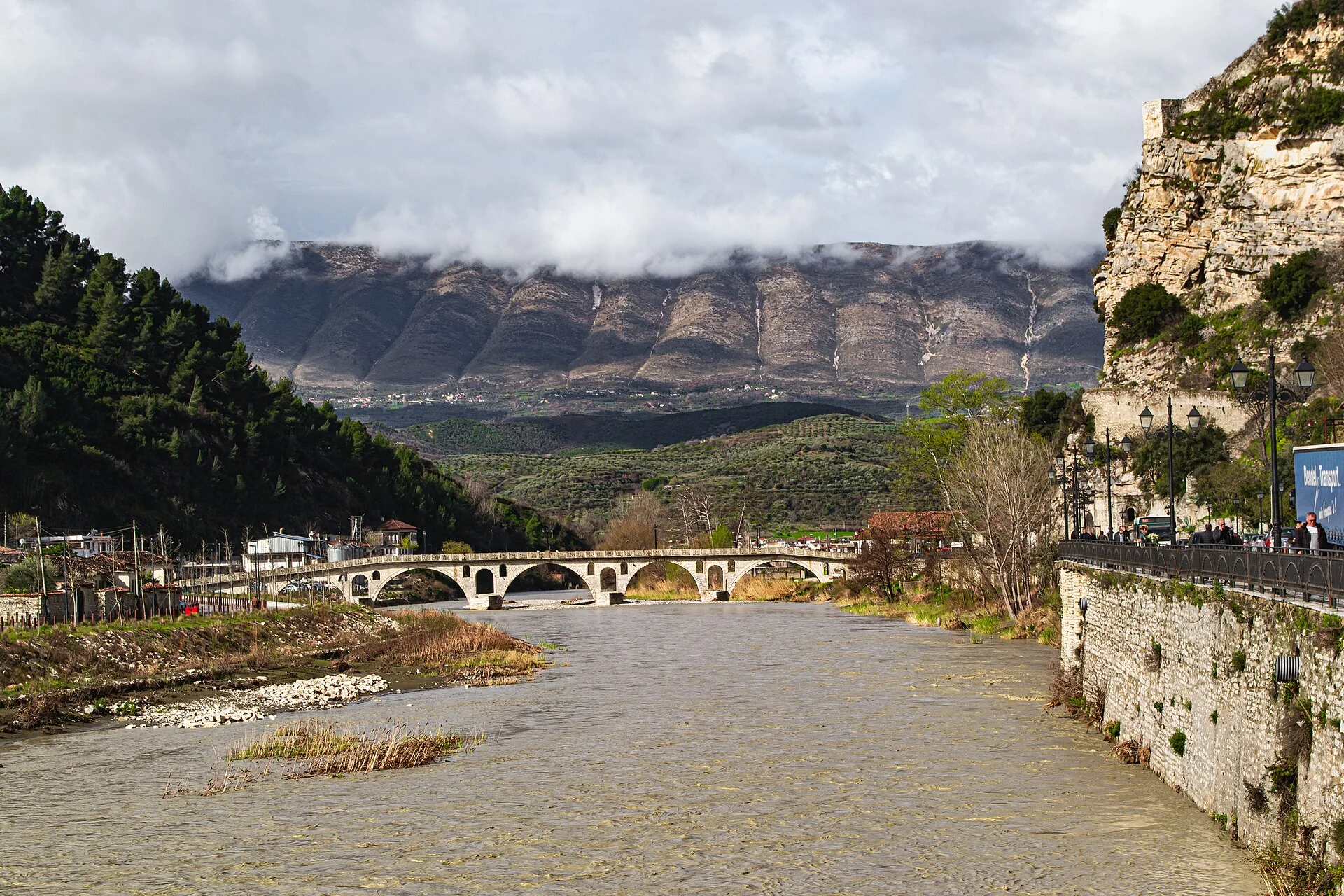
Berat rewards travelers who look past its famous hillside of white houses. The windows of Mangalem make a memorable first impression, but the city is most interesting at street level: stone lanes, family homes, places of worship, and a river that has long divided and connected its neighborhoods. Its historic core is part of the UNESCO-listed Historic Centres of Berat and Gjirokastra, recognized for distinctive architecture and centuries of cultural exchange.
Begin on both banks of the Osum
Start in Mangalem and climb gradually rather than treating the neighborhood as a single photo stop. The steep lanes reveal how houses fit into the slope, with shaded passages and changing views toward the opposite bank. Cross the river to Gorica for a different perspective. From there, the celebrated pattern of windows becomes easier to read as a whole urban landscape. Give yourself time to pause on the bridge and notice how ordinary life continues around the historic setting.
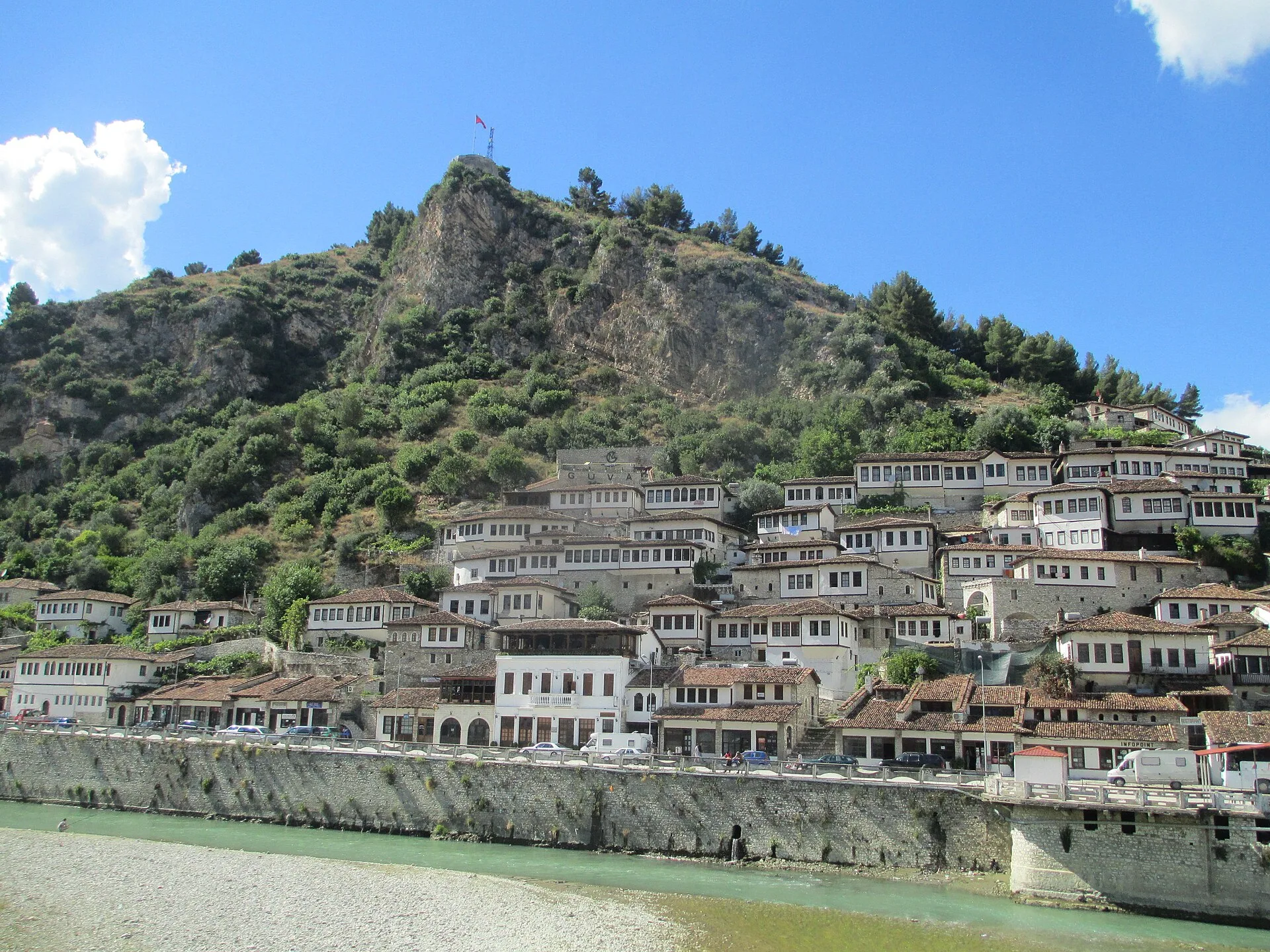
Make room for the castle
Berat Castle, or Kala, is a neighborhood as well as a monument. UNESCO notes that the fortified site contains churches and mosques reflecting different periods of the city’s history. Walk respectfully: some buildings remain religious spaces, and many nearby structures are homes. Comfortable shoes matter on the uneven stone, especially after rain. If you plan to enter museums or monuments, check their current opening details locally before climbing.
What to notice beyond the postcard
The city makes more sense when you connect its buildings to its social history. UNESCO describes Berat as a place shaped by merchants and craftspeople, with long-standing Muslim and Orthodox Christian communities. Seek out small museums or a local guide who can explain that context rather than trying to identify every façade from a distance. The best itinerary leaves room for an unhurried meal and a return across the river in different light.
For a short stay, spend one day exploring Mangalem, Gorica, and Kala on foot. Add another day if you want to visit museums or explore the surrounding Osum landscape. Berat’s steep streets make a compact map misleading; plan by walking effort, not distance. For heritage context, consult the UNESCO World Heritage Centre.
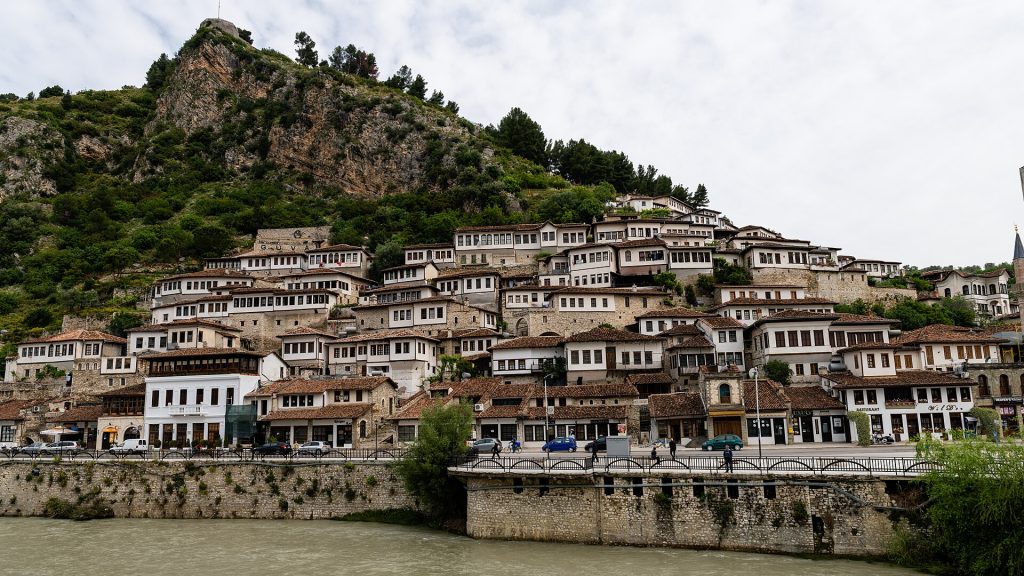
Choose your route by the climb
Berat’s old quarters look compact across the Osum, but Kala is an uphill walk on stone. If you have limited time or mobility, begin with Mangalem and the river crossing to Gorica, then decide whether the castle climb is realistic. The citadel is a living area, so keep doorways clear and enter religious buildings only where visitors are welcomed. UNESCO’s heritage description explains why the houses, churches and mosques are best understood together. A local guide is most useful when you want that history, not simply directions to a viewpoint.
Build a two-bank day
Begin in Mangalem while the lanes are calm, cross to Gorica for the broad hillside view, and decide whether to climb to Kala after a break. The sequence limits repeated steep ascents. If you plan a museum visit, check its hours locally before you start uphill; the narrow lanes are a pleasure to explore but a poor place to discover a closure after a tiring walk.
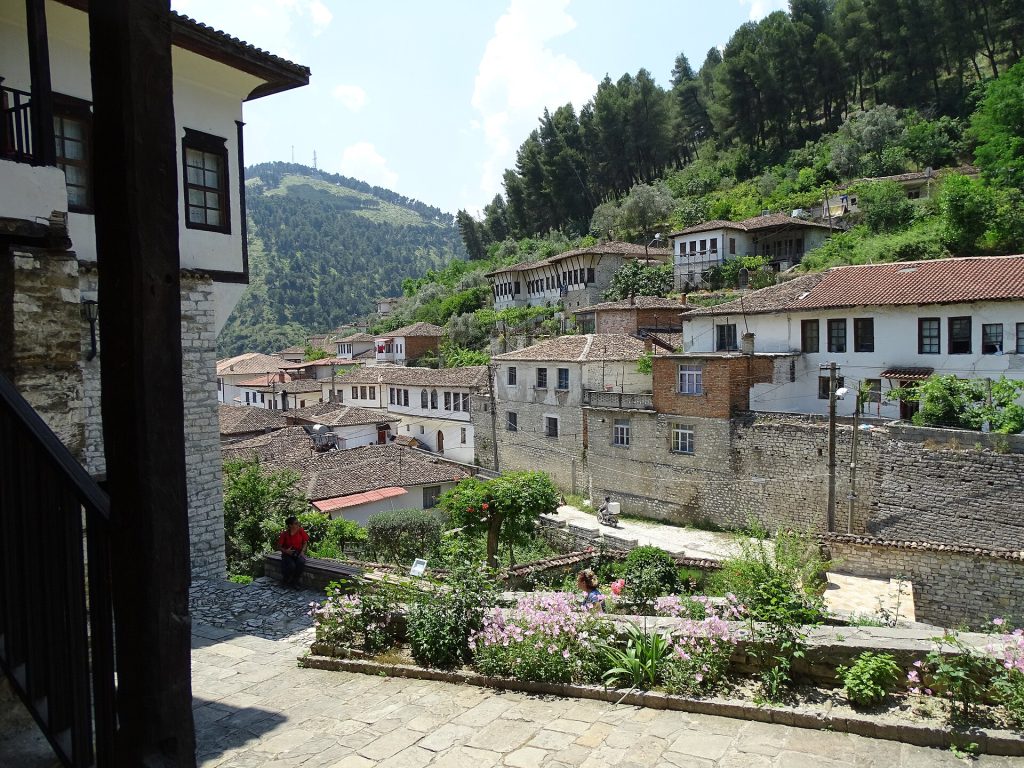
What a guide can add
A good local guide can connect individual buildings to Berat’s merchant history and its long-standing religious communities. Ask for a walk that includes both neighborhoods rather than only a fortress viewpoint. If you prefer to explore independently, read UNESCO’s historical overview first and use it to notice how homes, churches, and mosques occupy the same living landscape. Photograph homes from public space and respect residents’ privacy.


The conversation
Join the discussion
Have a useful tip or a question about this journey? Share it with fellow readers. Please keep comments respectful and relevant.